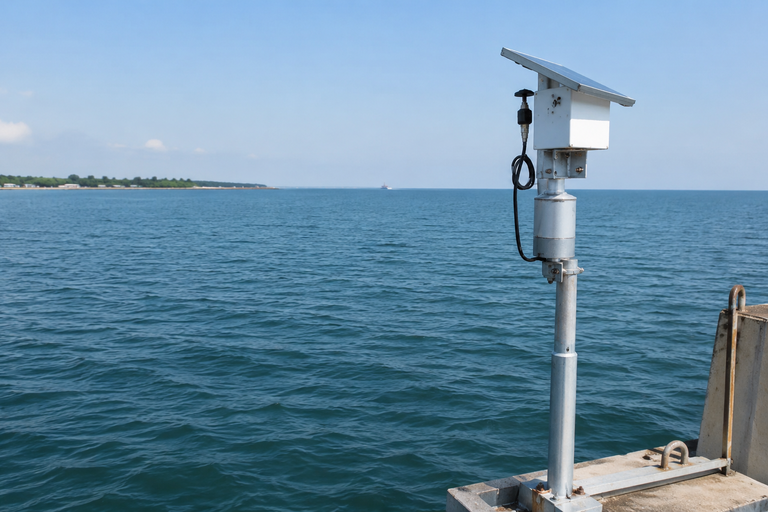
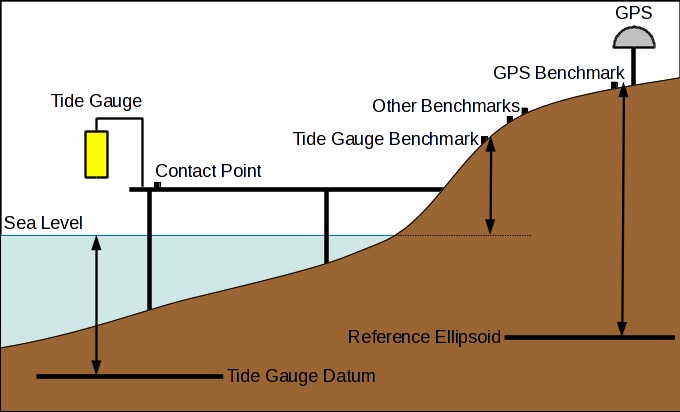
Sea level is a critical variable of our environment and has a high impact on coasts. Tide gauges are an important tool to determine trends in mean sea level, extreme conditions, tidal computation, harbor operations and navigation, as well as sea level hazards warning systems such as tsunamis etc.At the operational level, Falcon team propose the installation, maintenance and ensure data availability according to the different applications.
Tidal Data Collection and Interpretation
Reliable tidal observations depend on appropriate sensor positioning, consistent measurements, and accurate recording of water levels. The monitoring setup should consider the characteristics of the survey location, the required observation period, and the vertical reference used for recording water-level changes.
Collected measurements can be organized into time series for reviewing water-level fluctuations and comparing observations across different periods. Proper data checks help identify gaps or irregular readings that may affect subsequent analysis. The monitoring duration and measurement frequency should be selected according to the objectives of each project.
Tidal Monitoring for Hydrographic Surveying
Water-level variations are an important consideration when conducting hydrographic and bathymetric surveys in coastal waters, harbours, and navigation channels. Depending on the survey method and project requirements, tidal observations can help relate measured water depths to an appropriate vertical reference, supporting the accurate representation of underwater elevations.
Combining suitable water-level observations with bathymetric measurements helps survey professionals interpret seabed depths consistently and prepare reliable survey outputs for marine engineering, dredging, and coastal development projects.
For projects requiring underwater mapping and depth measurement, explore Falcon Survey’s Hydrographic and Bathymetric Survey Services for further information about survey methods and applications.
If you are in need of a residential land survey, commercial land survey or telecommunication land survey, Falcon Survey is the land surveying firm for your project.
FALCON SURVEY ENGINEERING CONSULTANTS is a pioneering Survey Engineering Company in U.A.E. established in the year of 2007, Falcon Survey Engineering built on a strong work ethic, honesty and a commitment to relationships.
Contact Info
209, 2nd Floor, Apricot Tower P.O. Box : 238544, Dubai Silicon Oasis Dubai - United Arab Emirates