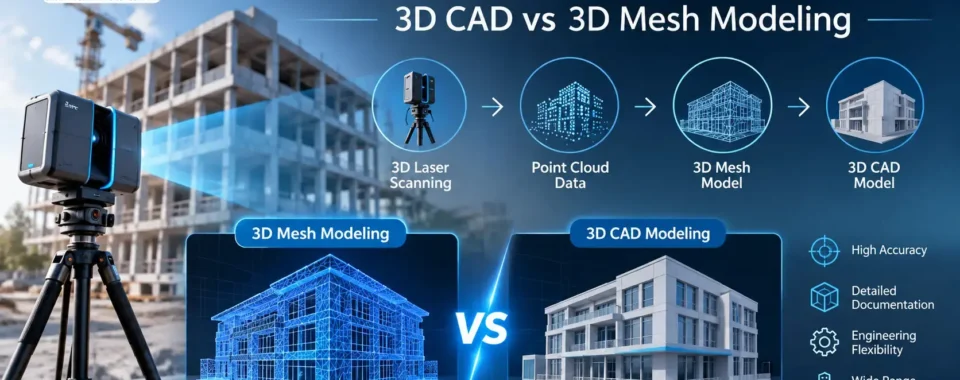
In modern engineering and digital design, 3D models are essential for representing physical objects with detailed geometric information. However, not all 3D models are created in the same way. 3D CAD scanning modeling and 3D mesh scanning modeling are two distinct approaches, each offering different capabilities depending on the project requirements.
While CAD modeling focuses on structured geometry and design control, mesh modeling concentrates on representing the actual surface and shape of an object. Understanding these differences is important when working with 3D laser scanning data, product reconstruction, engineering documentation, and digital asset development.
What Is 3D CAD Modeling?
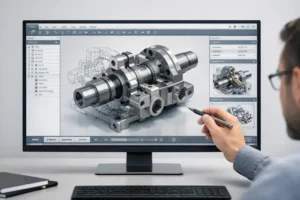
3D CAD modeling is a digital design method used to create geometrically structured representations of components, products, and structures. It uses elements such as points, lines, curves, surfaces, and solid features to define an object’s dimensions and form.
CAD models are particularly useful when projects require dimensional adjustments, design modifications, component development, or manufacturing documentation.
For existing physical components, scanned measurements can serve as a reference for reconstructing CAD geometry. This approach is especially valuable in reverse engineering projects where original technical drawings or design files are unavailable.
What Is 3D Mesh Modeling?
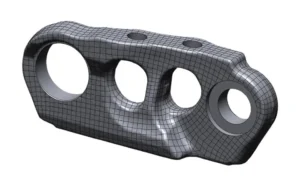
3D mesh modeling represents an object’s surface through a network of interconnected vertices, edges, and polygonal faces. It is widely used to capture complex shapes, surface irregularities, and intricate physical details.
In 3D laser scanning workflows, point cloud data can be processed into polygonal mesh models that closely represent the scanned object’s actual surface.
Mesh models are useful for visualization, digital preservation, surface inspection, architectural documentation, and applications involving complex or organic geometries.
How 3D Laser Scanning Connects Both Modeling Methods
3D laser scanning provides a practical connection between CAD and mesh modeling. Instead of manually measuring every feature of a physical object, scanning equipment captures its geometry as a collection of spatial data points.
This information can support two different modeling workflows.
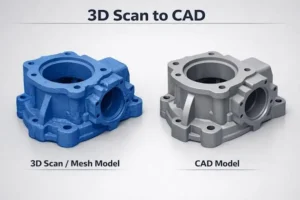
Scan-to-Mesh Workflow: The captured point cloud is processed to generate a polygonal mesh that represents the object’s scanned surface. This is useful when preserving physical details and complex geometries is the main objective.
Scan-to-CAD Workflow: The point cloud or mesh is used as a reference to reconstruct structured CAD geometry. This is useful when the final model needs to support engineering modifications, dimensional analysis, or manufacturing processes.
The choice between these workflows depends on the required output rather than simply the scanning equipment used.
When Should You Choose CAD Modeling or Mesh Modeling?
Selecting the appropriate modeling method depends on how the digital model will be used.
Choose 3D CAD Modeling When:
- Developing or modifying mechanical components.
- Reconstructing parts for manufacturing.
- Preparing engineering design references.
- Working with dimensional constraints and geometric features.
- Supporting reverse engineering requirements.
Choose 3D Mesh Modeling When:
- Capturing intricate surface characteristics.
- Documenting irregular or complex objects.
- Creating detailed digital representations of existing structures.
- Supporting 3D visualization and surface-based inspection.
- Preserving architectural or heritage details.
For some projects, combining both approaches provides the most practical solution. A mesh can preserve the scanned surface details, while a CAD model can provide structured geometry for further engineering work.
How 3D Laser Scanning Connects Both Modeling Methods
3D laser scanning provides a practical connection between CAD and mesh modeling. Instead of manually measuring every feature of a physical object, scanning equipment captures its geometry as a collection of spatial data points.
Writing
For projects requiring detailed digital documentation of existing buildings, structures, and industrial facilities, 3D Laser Scanning Services in Saudi Arabia provide valuable support through accurate spatial data capture. The collected point cloud information can be processed into 3D mesh models or used as a reference for CAD reconstruction, depending on the required project output. This approach helps engineering and construction teams work with detailed digital representations for as-built documentation, design evaluation, and facility management.
Why the Right Modeling Approach Matters
Choosing an appropriate modeling method affects the usefulness of the final digital output. A detailed mesh may be ideal for representing complex surface features, whereas a CAD model may be more suitable for design development and dimensional modifications.
The quality of the result also depends on scan resolution, data processing, surface complexity, and reconstruction requirements. Understanding these factors helps ensure that the selected model meets the intended technical purpose.
CAD provides structured geometry for engineering and design, while mesh modeling captures detailed surface information from physical objects.
When integrated with 3D laser scanning, both methods support a wide range of applications, from reverse engineering and component reconstruction to industrial documentation and digital preservation. Selecting the right approach ensures that scanned information becomes a useful digital asset for the next stage of a project.
Frequently Asked Questions (FAQs)
1. What is the main difference between 3D CAD modeling and 3D mesh modeling?
3D CAD modeling creates structured geometric models for engineering and design, whereas 3D mesh modeling represents an object’s surface using interconnected vertices, edges, and polygonal faces.
2. Can 3D laser scanning data be converted into a CAD model?
Yes. Point cloud data captured through laser scanning and 3D modeling can be processed and used as a reference to reconstruct CAD geometry. This process is commonly used in reverse engineering and component reconstruction.
3. Is a 3D mesh model suitable for engineering applications?
Yes. Mesh models are useful for surface inspection, dimensional comparison, visualization, and documenting complex geometries. However, applications requiring editable engineering features may need CAD reconstruction.
Can CAD and mesh models be used together in the same project?
Yes. A mesh model can preserve the scanned surface geometry, while a CAD model can provide structured design information. Using both can support inspection, reconstruction, engineering modifications, and project documentation.